STAR
An average-sized star
NASA calls the Sun a yellow dwarf, about 100 times wider than Earth, yet only an average star in terms of its size.
See the numbers doodlesun

8 MIN 20 Sfrom Sun to you
It is a ball of hydrogen and helium held together by its own gravity, about 150 million kilometres away. Deep inside, hydrogen fuses into helium, and that powers every sunrise.
Updated
THE SHORT ANSWER
Big by our standards, average for a star.
Its activity rises and falls in a cycle.
STAR
NASA calls the Sun a yellow dwarf, about 100 times wider than Earth, yet only an average star in terms of its size.
See the numbersSPOTS
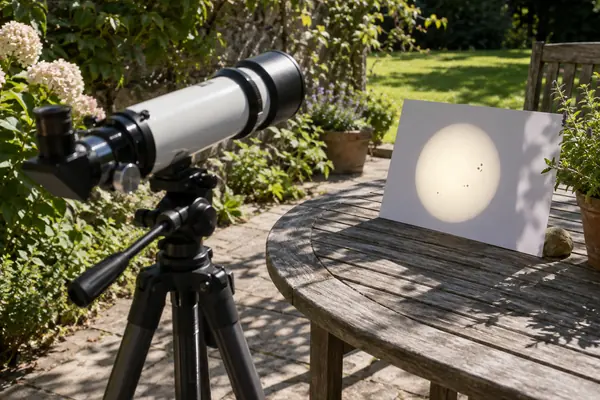
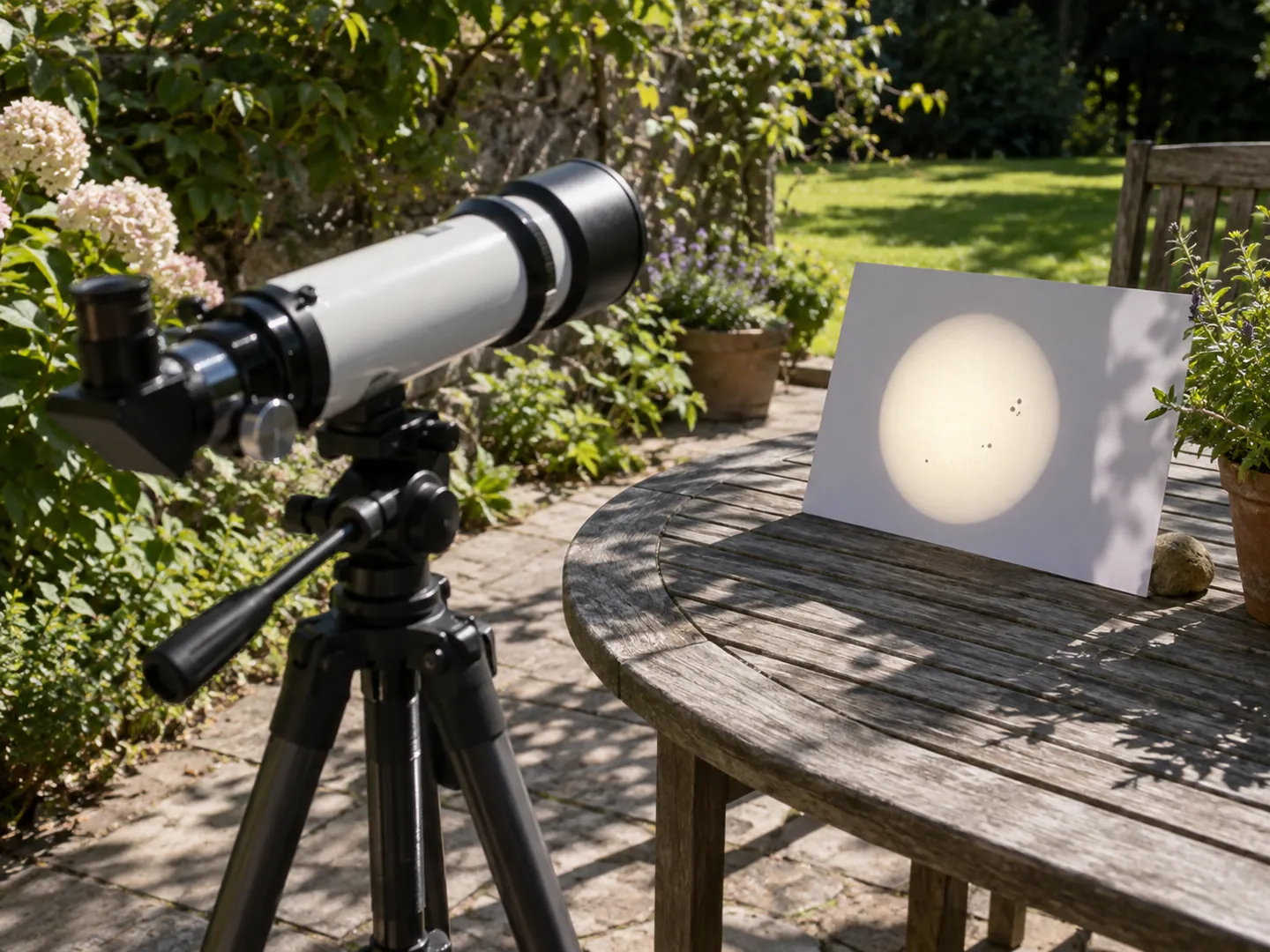
Sunspots are cooler areas on the visible surface, where intense magnetic fields push up from inside the Sun.
Compare the layersCYCLE
Sunspot numbers rise and fall over about 11 years. NASA and NOAA said in October 2024 that the Sun had reached solar maximum.
How the cycle worksA QUICK TOUR OF THE SUN
Pick a part of the Sun to see its temperature. The bar shows how hot it is compared with the other parts.
Figures from NASA's Sun facts page and NOAA's Space Weather Prediction Center. All are approximate.
TWO NUMBERS WORTH KNOWING
One figure on the Sun's size,
one on how far its light travels.
1.3 million
Earths it would take to fill the Sun
NASA says the Sun is about 1.4 million kilometres across and holds 99.8 percent of the mass of the solar system.
SIZE · NASA
8 min 20 s
Time for sunlight to reach Earth
Light crosses the average Sun-Earth distance of about 150 million kilometres in about 8 minutes and 20 seconds, says the Smithsonian's Air and Space Museum.
DISTANCE · SMITHSONIAN
That light is the end of a much longer trip. NASA says energy from the core bounces around in the Sun's radiative zone for about 170,000 years before it reaches the convection zone.

HOW THE SOLAR CYCLE WORKS
The Sun's magnetic activity rises and falls in a cycle of roughly 11 years. Scientists track it by counting sunspots.
The lull of the cycle, when few sunspots appear. Cycle 24 ended and Cycle 25 began in December 2019.
A new cycle starts when sunspot groups show up at higher latitudes with magnetic polarity opposite to the last cycle's.
The most active part of the cycle. NASA and NOAA announced on 15 October 2024 that Cycle 25 had reached it.
Roughly every 11 years, at the height of the cycle, the Sun's magnetic poles swap places, and the count begins again.
A STAR WITH A LIFE STORY
NASA says the Sun is about 4.5 billion years old and a little less than halfway through its lifetime. It turns about once every 25 Earth days at its equator and 36 at its poles, because it is gas, not solid rock.
In about 5 billion years it is expected to swell into a red giant, which may engulf Mercury, Venus and possibly Earth, before ending as a white dwarf.
Questions
NASA classes the Sun as a G2 V yellow dwarf, a main-sequence star. It is a ball of hydrogen and helium held together by its own gravity and is only an average star in terms of size.
About 150 million kilometres (93 million miles) on average. At that distance sunlight takes about 8 minutes and 20 seconds to reach Earth.
In the core, at about 15 million °C, hydrogen is fused to form helium. NASA says these nuclear reactions power the Sun's heat and light.
Dark areas on the visible surface where intense magnetic fields push up from inside. They are cooler than the surroundings, last from days to months, and range from about 1,600 to 160,900 kilometres across.
About 11 years. NOAA numbers the cycles from Solar Cycle 1 in 1755. The current one, Cycle 25, began in December 2019 and reached solar maximum, announced in October 2024.
ABOUT THIS NAME
doodlesun.com is part of the DoodleSale portfolio. It isn't in an auction right now, but you can ask about leasing it.